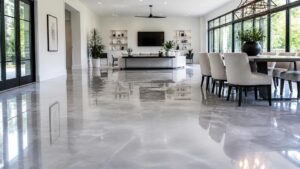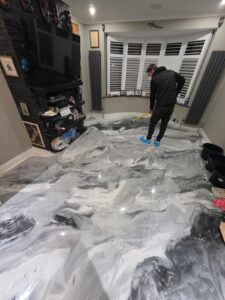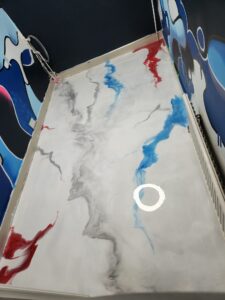
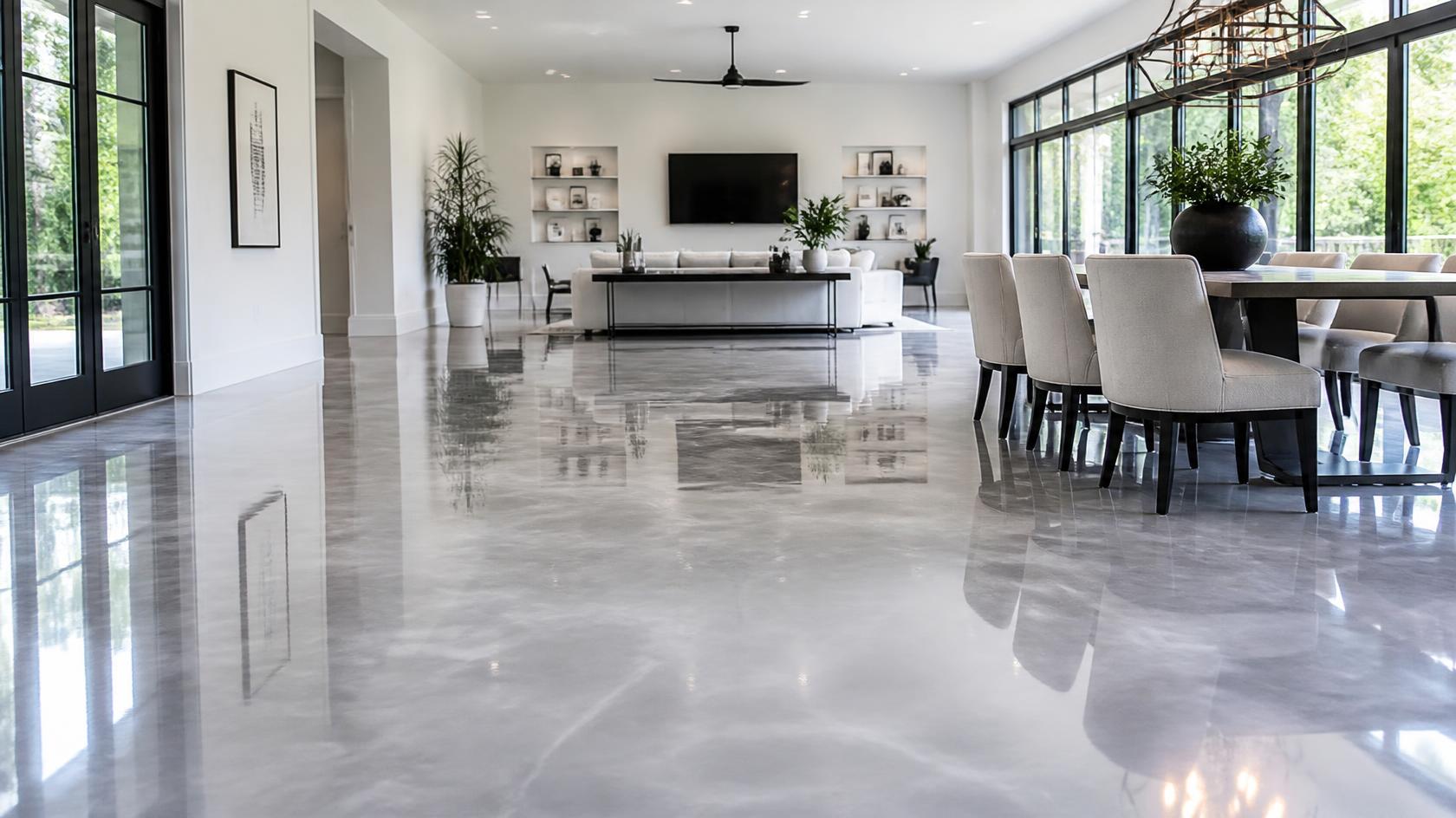
Epoxy flooring is a resin coating system applied onto concrete. Polished concrete is the concrete slab itself, mechanically ground and densified to a finished surface. One protects the slab. The other is the slab. Neither is universally better — the right choice depends on what the floor needs to resist, how much design control you need, and the condition of the concrete you are starting with. Here is the honest comparison across durability, cost, chemical resistance, maintenance, appearance and suitability for UK projects.
Core Differences
Epoxy Flooring vs Polished Concrete: What's the Difference?
These are not two versions of the same thing. The materials, processes and performance profiles are fundamentally different. Epoxy flooring is a multi-layer resin system — primer, base coat, optional decorative layer, topcoat — applied onto mechanically prepared concrete. Thickness ranges from 0.3mm to 5mm+. The resin is the wearing surface. The concrete is the substrate. Polished concrete is produced by grinding the slab through progressively finer diamond pads, then applying a chemical densifier that hardens the surface pores. No coating is added. The concrete itself becomes the finished floor.
| Feature | Epoxy Flooring | Polished Concrete |
|---|---|---|
| What it is | Resin system applied onto concrete | Concrete ground and chemically densified |
| Added thickness | 0.3mm–5mm+ | None — it is the slab |
| Appearance | Fully controllable — solid colour, metallic, flake, quartz | Natural concrete tones and exposed aggregate |
| Chemical resistance | High — specified by resin type and exposure | Moderate — densifier improves but does not seal fully |
| Stain resistance | High — spills sit on the sealed surface | Lower — oils and acids can penetrate if not cleaned quickly |
| Anti-slip control | Aggregate, texture or finish specified to environment | Limited — higher polish levels are slippery when wet |
| UV stability | Requires UV-stable topcoat to prevent yellowing | Inherently UV-stable — no yellowing |
| Repairability | Localised recoating feasible | Patching difficult to blend invisibly |
| Substrate requirement | Any sound concrete, mechanically prepared | High-quality, well-placed concrete only |
Key distinction: polished concrete is not an unfinished concrete floor. A raw slab dusts, stains and deteriorates. Polished concrete is a specified finish — but it depends on the quality of the concrete underneath. You cannot polish a weak or cracked slab into a good floor.
Durability
Which Is More Durable?
Both last 10–20+ years. But they resist different types of stress, and that distinction determines which suits which environment. Under foot traffic, polished concrete performs very well. Under forklift and vehicle traffic, epoxy provides better impact protection — polished concrete can chip under heavy point loads. For chemicals, oils and solvents, epoxy is specified to match the exact exposure; polished concrete offers moderate resistance but acids and oils can stain or etch the surface. Epoxy yellows without a UV-stable topcoat, while polished concrete is inherently UV-stable.
The practical takeaway: chemicals, staining or heavy operational traffic → epoxy gives you specification control. Clean, dry pedestrian traffic → polished concrete performs well without a coating. The Concrete Society provides guidance on protective system selection for concrete substrates.
"Neither system is universally better — each suits different conditions. The right choice depends on what the floor needs to resist, how much design control you need, and the condition of the concrete you are starting with."
Cost
Which Costs More in the UK?
Comparable at mid-range, but the cost structure is different. Both typically cost £30–£80+ per m² installed, depending on the system and slab condition. Polished concrete can be cheaper when the slab is already excellent — grinding is the polishing process itself, so preparation and finishing overlap. When concrete needs significant repair or levelling, costs climb, and some slabs cannot be polished to an acceptable standard at all.
Epoxy costs depend on system specification. A basic single-colour coating is at the lower end; decorative metallic, flake or quartz systems add cost. Repair is more cost-effective with epoxy — local prep and recoat versus re-grinding and blending polished concrete, which is often visible.
Maintenance
Which Is Easier to Maintain?
Both are straightforward day to day — sweep and mop. The difference is in forgiveness. Epoxy is more forgiving: spills sit on the sealed surface, stain removal is easy on an intact coating, and damage can be locally prepared and recoated. Polished concrete is less forgiving when stains penetrate — oils and acids can absorb into the surface if not cleaned quickly, and once absorbed, removal is difficult. Localised repairs to polished concrete rarely blend invisibly with the surrounding finish.
Long-term upkeep differs too. Epoxy floors benefit from periodic deep cleaning and offer the option of a full recoat to extend life. Polished concrete requires periodic densifier reapplication and guard product maintenance, but never needs recoating in the traditional sense.
Best Use by Environment
Which Is Better for Specific UK Environments?
This is the decision that matters most. Neither system is universally better — each suits different conditions.
- Residential garage → Epoxy — resists oil, fuel, de-icing salt and hot tyre pickup. Locally repairable.
- Warehouse → Epoxy — chemical resistance, impact protection, anti-slip options for operational use.
- Workshop → Epoxy — oil and solvent resistance, textured anti-slip finishes, locally repairable.
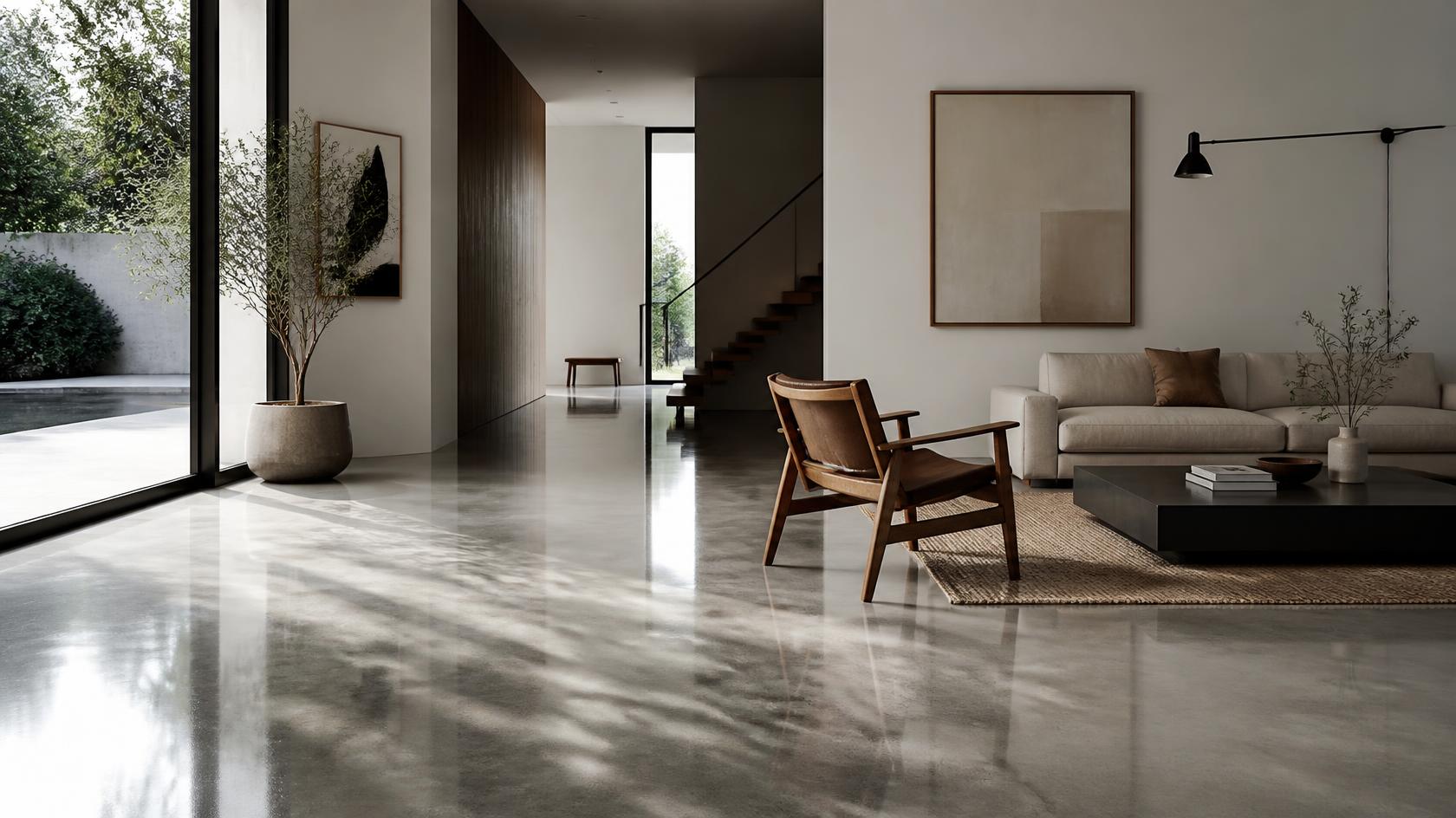
- Retail shop → Either — polished concrete for natural aesthetic; epoxy for branded, coloured or design-led floors.
- Showroom → Either — polished concrete for minimal, contemporary look; metallic epoxy for high-end visual impact.
- Commercial kitchen → Epoxy — chemical resistance, hygiene compliance, anti-slip aggregate specification.
- Office → Either — polished concrete for contemporary finish; epoxy for colour control and easy maintenance.
- Industrial facility → Epoxy — specified to match exact chemical, thermal and mechanical conditions.
Retail, showroom and office are where polished concrete competes strongest. Anywhere involving chemicals, heavy traffic, hygiene or anti-slip requirements → epoxy's specification flexibility wins.
Overlay
Can Polished Concrete Be Coated with Epoxy?
Yes — but polished concrete is smooth and dense by design, which is the opposite of what epoxy needs to bond to. The surface must be mechanically abraded to create a profile, and silicate densifiers fill the pores a primer normally penetrates, so preparation and primer selection are critical. This is typically done when a property's use changes — a showroom converting to food preparation, for example, where chemical resistance becomes a requirement. For more detail on coating existing floors, visit our frequently asked questions page.
Knowing which system suits which environment starts with understanding substrates. Our 2-day Epoxy Mastery course runs every second weekend of the month — covering assessment, preparation, system selection, application and finishing. Leave with a certificate and the confidence to specify and install resin flooring correctly.
View Course Dates & Book →What Are the Downsides of Each?
Neither system is without limitations. Knowing the weaknesses is as important as knowing the strengths.
Epoxy Flooring Limitations
Standard epoxy yellows under UV without a UV-stable topcoat. It is entirely dependent on substrate preparation — poor prep causes failure regardless of resin quality. Application requires controlled temperature and humidity. Decorative systems demand experienced technique. The floor is only as good as its weakest layer.
Polished Concrete Limitations
Appearance is limited to what the concrete provides — no custom colours without dyes. The surface is vulnerable to oil and acid staining. It requires a high-quality slab — cracks and poor concrete cannot be polished away. Repairs are visible and hard to blend. Higher polish levels can be slippery when wet. There is no chemical barrier for aggressive exposures. The Concrete Polishing Association provides specification and maintenance guidance for polished concrete floors in the UK.
Decision Framework
How Should You Actually Choose Between Them?
Three questions cut through the comparison. What does the floor need to resist? Chemicals, oils, staining, heavy operational traffic, specific hazards → epoxy, specified to match. Clean, dry pedestrian traffic in a controlled environment → polished concrete is viable. How much control do you need over appearance? Specific colours, branding, anti-slip texture, decorative effects → epoxy. Natural concrete aesthetic with exposed aggregate → polished concrete. What condition is the concrete in? Good slab, well-placed, no significant defects → both options open. Cracked, contaminated, uneven or damp → epoxy applied to a properly prepared substrate is more forgiving than attempting to polish a problem slab.
Both systems fail on poor concrete — epoxy because of preparation errors, polished concrete because the slab was never suitable. Understanding substrate assessment, system selection and preparation quality is what separates a successful installation from an expensive mistake. Our training gallery shows the range of finishes our graduates learn to deliver.
Frequently Asked Questions