Epoxy flooring in the UK is no longer used purely as a practical industrial coating. In 2026, decorative finishes, seamless resin designs and specialised systems are expanding where and how epoxy floors are installed — across homes, commercial interiors and specialist environments. This article covers the biggest epoxy flooring trends in the UK for 2026, which systems suit which spaces, and what has changed for professionals working with these products.
Key Trends
What Are the Biggest Epoxy Flooring Trends in 2026?
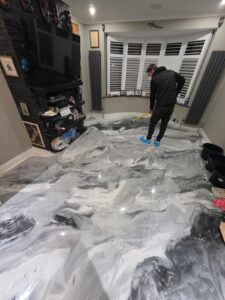
- Decorative epoxy is moving beyond garages — kitchens, hallways, utility rooms and open-plan living areas are now specifying resin flooring for its seamless finish, durability and low maintenance.
- Metallic epoxy is becoming more design-led — restrained tones and controlled pigment movement are replacing novelty finishes in showrooms, salons and residential interiors.
- Flake systems are being specified for commercial floors — gyms, retail stockrooms, staff areas and light industrial spaces are adopting flake epoxy for its visual interest, slip resistance and durability.
- Quartz and textured systems are gaining traction — commercial kitchens, food production areas and high-traffic environments use quartz epoxy for slip and chemical resistance.
- Seamless flooring is part of modern commercial interiors — offices, co-working spaces, retail and hospitality venues specify seamless resin flooring for clean aesthetics and ease of maintenance.
- Floor preparation is becoming more technically demanding — as systems grow more complex, the quality of concrete preparation, moisture testing and primer selection defines whether a floor performs.
Market Growth
Is Decorative Epoxy Flooring Becoming More Popular in the UK?
Decorative epoxy flooring is growing across several sectors in the UK, but it is not replacing traditional flooring universally. It is being chosen where its specific properties — a seamless finish, chemical resistance and design flexibility — suit the environment.
The sectors driving this growth include residential renovations (kitchens, hallways, open-plan living), showrooms and retail, hospitality and restaurants, offices and co-working spaces, salons and studios, and garage conversions. Commercial and industrial projects continue to use flake, quartz and self-levelling systems where performance is the primary driver. If you are considering a career in this growing market, explore our training courses to get started with the right foundation.
"The shift matters for three groups: homeowners now have access to modern options previously limited to commercial projects, businesses are specifying decorative flooring where appearance and performance both matter, and installers are being asked to deliver systems that require more technical knowledge than a basic garage coating."
System Comparison
Metallic vs Flake vs Quartz Epoxy Flooring
Choosing between epoxy flooring systems depends on the space, performance requirements and desired appearance. This comparison covers the four most commonly specified systems in the UK.
| System | Appearance | Typical Use | Key Advantage | Main Consideration |
|---|---|---|---|---|
| Metallic epoxy | High-end, fluid | Showrooms, interiors, salons | Unique one-of-a-kind finish | Application technique is critical |
| Flake epoxy | Speckled, textured | Garages, gyms, commercial | Practical and decorative | Flake density and finish specification |
| Quartz epoxy | Textured, aggregate | Commercial kitchens, industrial | Maximum durability and slip resistance | System build-up complexity |
| Self-levelling | Smooth, seamless | Offices, retail, hospitality | Clean uniform finish | Substrate preparation must be faultless |
Metallic epoxy uses metallic pigments that move within the resin during application, meaning no two floors look the same. It demands experienced application technique. Flake epoxy is the most versatile system — flake density can be adjusted from a light decorative scatter to a full broadcast for heavy commercial use. Quartz epoxy is specified where performance comes first — anti-slip, chemical resistance and heavy wear capability. Self-levelling epoxy creates a seamless surface that telegraphs every substrate imperfection, making concrete preparation the most important step.
Choosing the Right System
What Type of Epoxy Flooring Is Best for Different Spaces?
The right epoxy flooring system depends on the environment. Garages suit flake or solid-colour epoxy for chemical resistance and durability. Retail shops and showrooms benefit from self-levelling or metallic systems for their clean finish and visual impact. Warehouses and industrial units need high-build or quartz epoxy for maximum durability and chemical resistance. Workshops perform best with flake or quartz for hard-wearing, slip-resistant surfaces. Restaurants and commercial kitchens require quartz or polyurethane resin for anti-slip, hygienic and chemical-resistant performance. Offices and co-working spaces typically specify self-levelling epoxy for a uniform modern finish with low maintenance.

Preparation
Why Surface Preparation Matters More Than the Finish
Can a good-looking epoxy floor still fail because of poor preparation? Yes — and it is the most common cause of resin flooring failure in the UK. The substrate determines whether the system bonds, cures and performs. If the concrete is contaminated, too smooth, damp or cracked, the epoxy coating system will fail regardless of the topcoat quality.
Proper preparation means assessing concrete condition and strength, removing oil, grease and contamination, using mechanical preparation (diamond grinding or shot blasting) to create the correct surface profile, testing moisture levels with calibrated equipment, repairing cracks and defects, selecting the correct epoxy primer for the substrate, and ensuring every layer in the system is compatible and applied within recoat windows. Skipping preparation is the fastest route to delamination, blistering and system failure. The Resin Flooring Association (FeRFA) publishes industry standards and guidance on resin flooring systems and best practice.
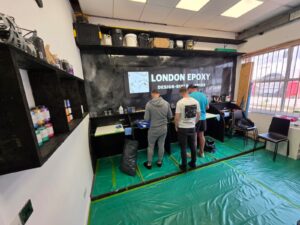
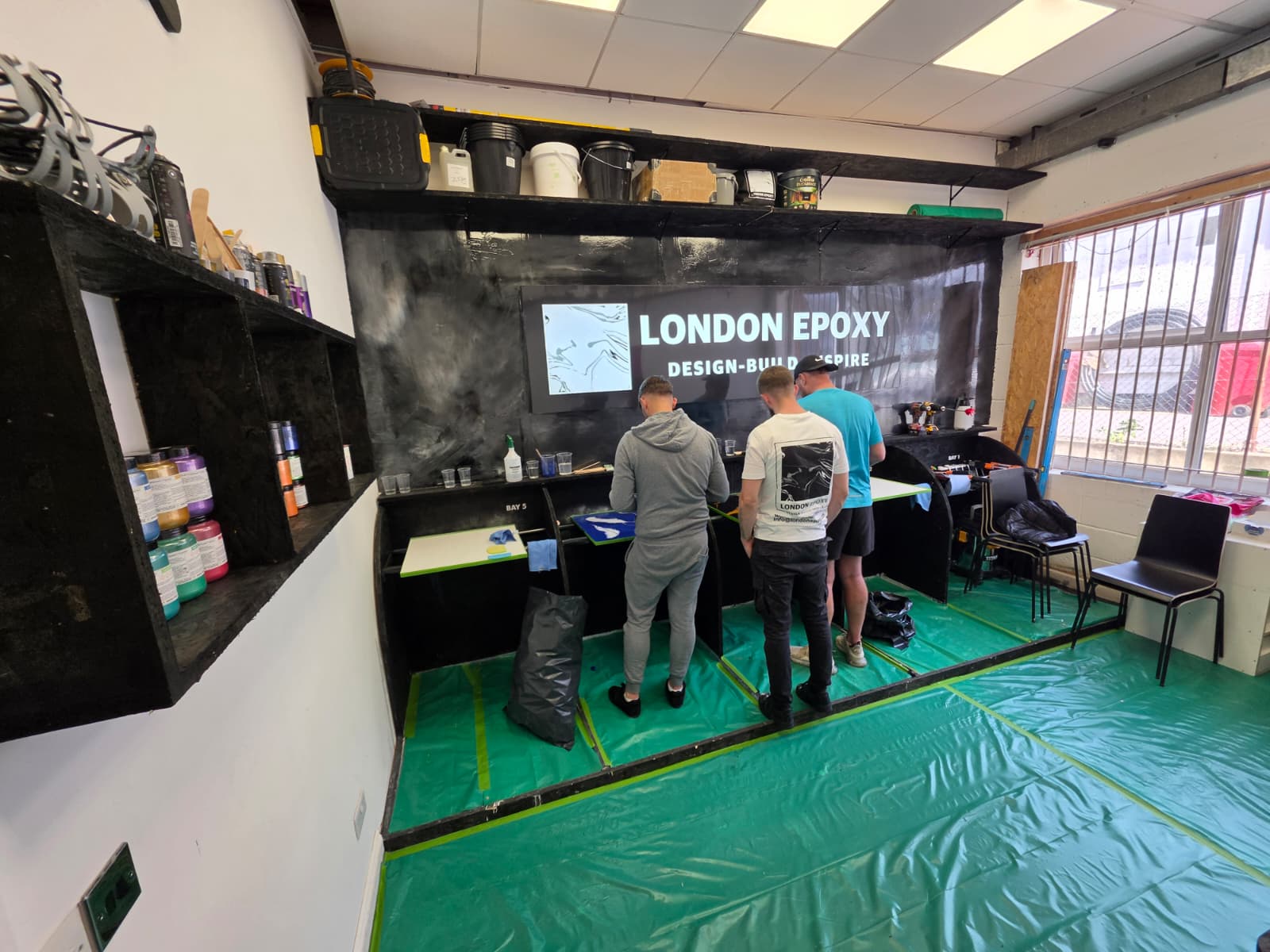
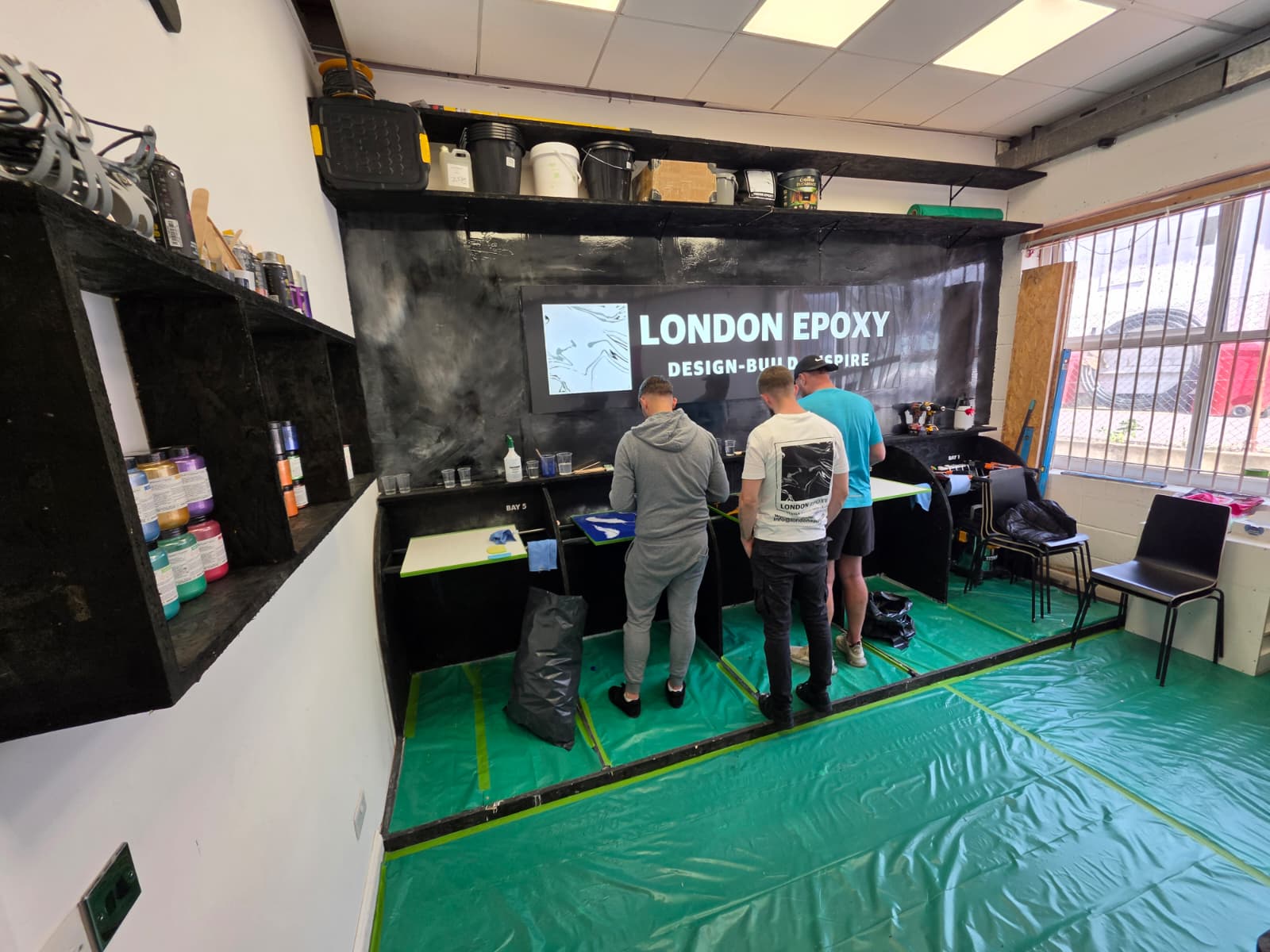
Our 2-day Epoxy Mastery course runs every second weekend of the month. Learn preparation, application, decorative techniques and finishing — and leave with a certificate and the confidence to take on real jobs.
View Course Dates & Book →What Is Changing for Epoxy Flooring Installers in 2026?
The professional standard for epoxy flooring installers is shifting from basic coating application toward full system competence. Clients, specifiers and the industry now expect installers to understand substrate assessment, moisture testing using calibrated hygrometers, mechanical preparation methods and equipment, product selection across epoxy, polyurethane, polyaspartic and MMA systems, resin and hardener ratios, mixing and pot life management, decorative application techniques, topcoat selection for slip resistance, UV stability and chemical resistance, and troubleshooting defects during and after application. The Health and Safety Executive (HSE) provides further guidance on workplace flooring safety requirements.
This reflects current professional resin flooring training, which increasingly covers moisture control, preparation methods and specialist tooling alongside practical application.
Step by Step
What Should You Learn Before Installing Modern Epoxy Flooring?
Surface Preparation and Concrete Assessment
Learn how to assess concrete condition, identify contamination and select the correct mechanical preparation method — diamond grinding or shot blasting — to create the right surface profile.
Resin and Hardener Ratios, Mixing and Pot Life
Understand how to measure and mix epoxy resin and hardener correctly, manage pot life and avoid common mixing errors that lead to curing failures.
Application Tools and Methods
Get hands-on with rollers, squeegees, spiked shoes and specialist application equipment used across self-levelling, flake and metallic systems.
Multi-Layer System Build-Up
Learn the correct order and timing for primers, base coats, decorative layers and topcoats — and why recoat windows matter for system integrity.
Decorative Techniques: Metallic, Flake and Quartz
Practise metallic pigment manipulation, flake broadcasting at different densities and quartz aggregate application — the techniques that set professional installers apart.
Finishing, Topcoat Selection and Troubleshooting
Select the right topcoat for slip resistance, UV stability and chemical resistance. Learn to identify and fix common defects including blistering, fisheyes and delamination.
London Market
Are Epoxy Flooring Trends Different in London?
The same resin flooring systems are used across the UK. What differs in London is the concentration of project types that favour decorative and modern epoxy flooring — residential renovations with open-plan layouts suited to seamless resin floors, commercial office and co-working fit-outs, retail and hospitality interiors specifying design-led finishes, automotive and luxury showrooms using metallic or high-gloss systems, and garage conversions in outer London using flake and solid-colour epoxy.
The London market tends to adopt decorative resin flooring trends earlier and specify higher-end systems for residential and commercial interiors. But the technical requirements — preparation, system selection, correct application — are identical to any project elsewhere in the UK.
Frequently Asked Questions