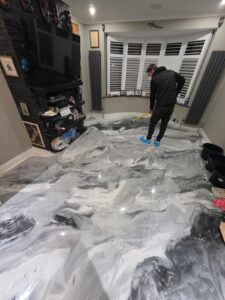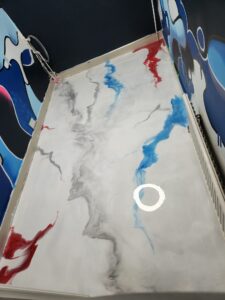

Epoxy flooring in the UK typically costs between £20 and £150 per m² installed, depending on the system, floor condition, and location. A basic epoxy coating for a garage starts around £20–£40/m², while a decorative metallic finish for a showroom or interior space can reach £120–£150/m². In London, expect to pay 15–25% above the national average due to higher labour rates and access costs. The biggest variable most people overlook isn't the resin — it's surface preparation, which can add £5–£15/m² to any project and determines whether the floor lasts two years or twenty.
At a Glance
Key Takeaways: Epoxy Flooring Costs in the UK
- Installed cost range — Epoxy flooring costs £20–£150/m² depending on system type and specification.
- London premium — Prices in London and the South East run roughly 15–25% above the UK average.
- Preparation is the biggest variable — Surface grinding, moisture testing, and crack repair typically add £5–£15/m² and cannot be skipped.
- Professional vs DIY lifespan — A correctly installed professional floor lasts 10–20+ years; DIY kits average 2–5 years before failure.
- Compare full systems, not just headline prices — Always compare quotes that include materials, prep, coats, and labour.
Pricing Breakdown
How Much Does Epoxy Flooring Cost Per m² in the UK?
The most common question — and the one with the widest range of answers. Epoxy flooring cost per m² in the UK varies because "epoxy flooring" describes everything from a thin single-coat paint-style coating to a 3mm+ self-levelling industrial system. A basic two-coat epoxy coating applied by roller sits at the budget end; a full decorative metallic pour with primer, base coat, metallic layer, and polyurethane topcoat sits at the premium end. Surface preparation — which includes diamond grinding or shot blasting the concrete — is priced separately and added on top. The table below gives you a realistic 2026 baseline for each system type, installed by a UK contractor.
| Epoxy System | Typical Installed Cost/m² | Best Suited For |
|---|---|---|
| Basic epoxy coating (2-coat roller) | £20–£40 | Garages, light domestic, sheds |
| Epoxy flake / vinyl chip system | £40–£80 | Garages, showrooms, commercial |
| Self-levelling epoxy (2–3mm) | £45–£75 | Retail, commercial, warehouses |
| Heavy-duty industrial epoxy | £55–£100 | Factories, workshops, HGV areas |
| Decorative / metallic epoxy | £80–£150 | Showrooms, residential interiors |
Prices are indicative installed costs including labour and materials. Preparation costs are additional — always verify against current contractor quotes before budgeting. A key point the resin industry body FeRFA (Resin Flooring Association) makes clear: resin flooring systems are classified by type and build thickness — a Type 2 thin coating and a Type 5 flow-applied floor are fundamentally different products. Comparing quotes without specifying the system is why so many buyers end up with an unexpected cheap job.
London & South East
How Much Does Epoxy Flooring Cost in London?
London epoxy flooring costs run higher than the national average for three practical reasons: labour rates, logistics, and project minimum charges. A contractor mobilising from North London to a warehouse in Barking carries different overheads to one working in Sheffield — congestion charge zones, parking restrictions, and van access in built-up areas like Hackney or Southwark all add time and cost. For most systems, London pricing sits approximately £5–£20/m² above the UK average, depending on location and project size. Central London commercial jobs typically sit at the top of this range; outer zones like Croydon, Enfield, or Romford are closer to the UK-wide figures.
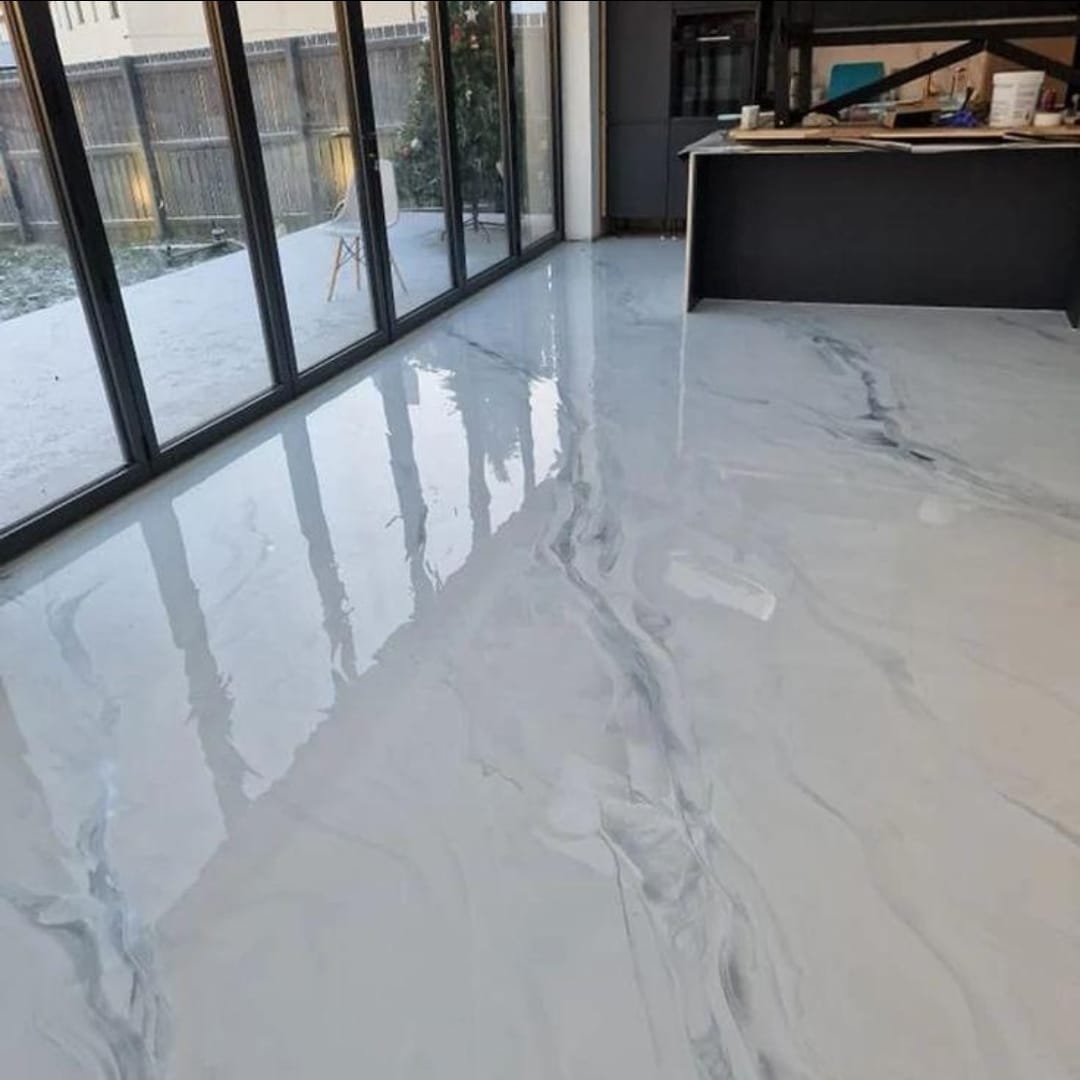
Is epoxy flooring more expensive in London than the rest of the UK?
Yes, consistently — but the gap closes on larger jobs. On a 20m² garage, the London premium can feel significant because minimum charges are spread over less area. On a 500m² warehouse in an industrial estate with straightforward access, a London contractor and a Midlands contractor will often quote within 10% of each other, because mobilisation and material costs dominate the per-m² figure rather than local labour rates alone.
How much does garage epoxy flooring cost in London?
A standard single garage (approximately 18–22m²) with an epoxy flake system professionally installed in London typically costs £900–£1,800 all-in, including grinding and preparation. A basic two-coat roller finish at the budget end comes in around £500–£900. Metallic or decorative finishes on the same area can reach £2,000–£2,800. These figures assume reasonable concrete condition — if the slab has serious cracking, damp, or old paint to remove, preparation costs push the total up. If you're considering training to install epoxy floors yourself, understanding these cost drivers is the first step toward accurate quoting on real jobs.
"The London premium on epoxy flooring is real — but it's driven more by logistics and minimum charges than material costs. On larger commercial projects, the gap narrows considerably."
Before You Sign Anything
What Does a Professional Epoxy Flooring Quote Actually Include?
A proper epoxy flooring quote from a reputable UK contractor should be itemised. If a quote is a single lump sum with no breakdown, ask for the detail before accepting it — you need to know what you're comparing across multiple contractors. The Contract Flooring Association (CFA) recommends always requesting a full written specification, not just a price. This protects you if the finished floor fails to perform as described.
- Site survey and assessment — checking moisture levels (RH%), slab condition, and contamination before any work begins.
- Surface preparation — diamond grinding or shot blasting, crack repair, laitance removal; this is always priced separately.
- Moisture mitigation — a DPM or epoxy moisture barrier if relative humidity exceeds 75%.
- Primer coat — bonds to the substrate and seals porosity; a skipped primer is a future delamination.
- Build coats and broadcast layer — the specified epoxy system coats; flake/quartz systems include a broadcast aggregate layer.
- Topcoat / sealer — the wear layer, often polyurethane for UV stability and chemical resistance.
- VAT at 20% — confirm whether quoted prices are ex-VAT or inclusive.
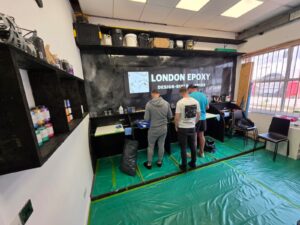
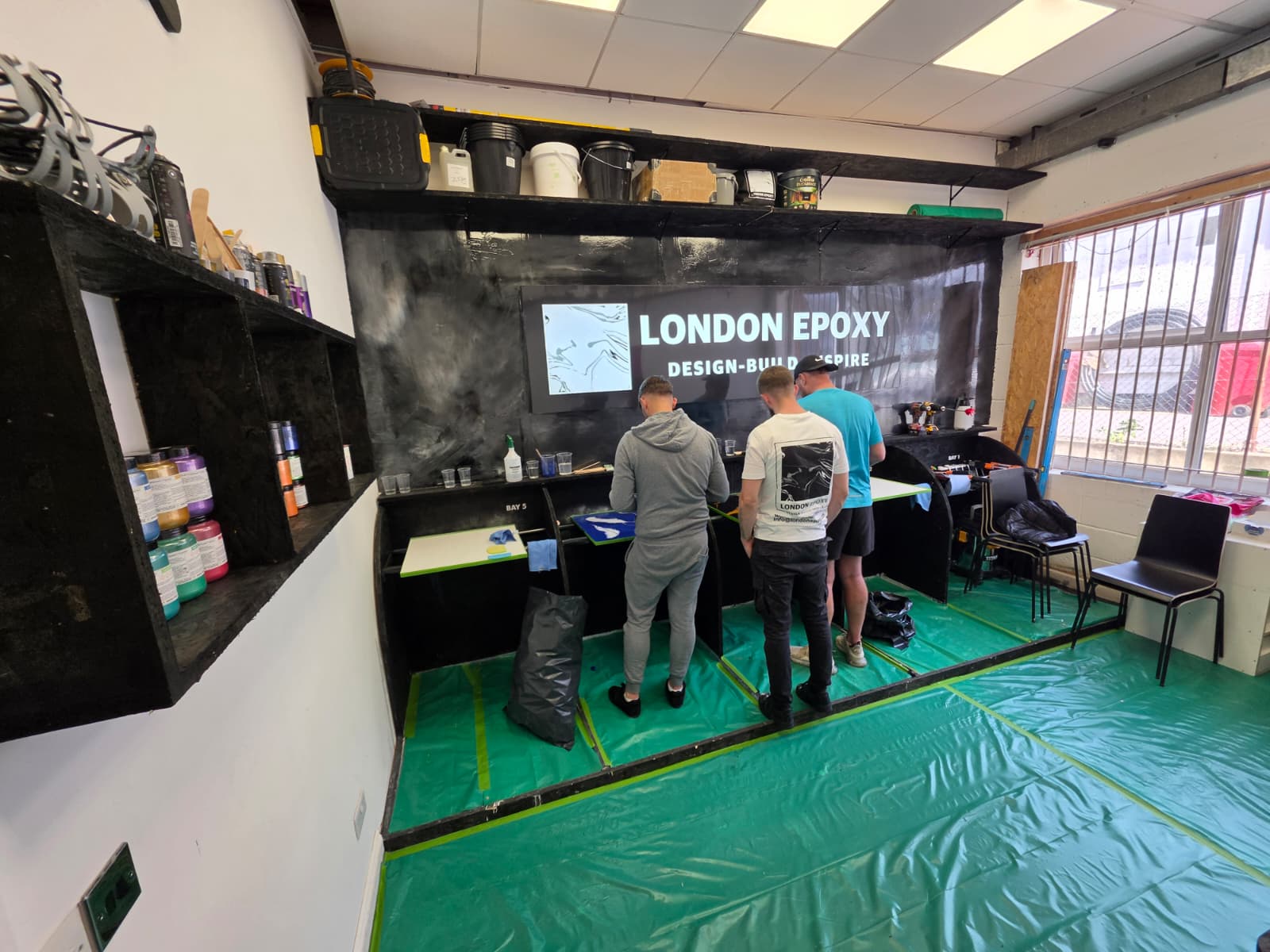
London Epoxy Academy runs a 2-day hands-on intensive every second weekend of the month — covering surface preparation, system selection, mixing, application, and fault diagnosis. The skills that separate a £150/day installer from a £350/day specialist.
View Course Dates & Book →What Factors Affect the Cost of Epoxy Flooring in the UK?
No two epoxy flooring quotes will be identical, and understanding why helps you ask better questions — whether you're a property owner commissioning a floor or a tradesperson learning to price jobs accurately. These are the main cost drivers, in rough order of impact.
Floor condition and surface preparation
This is the biggest variable most people don't budget for. A concrete slab contaminated with oil, with an old paint coating, or one that tests high for moisture needs significantly more work before any epoxy goes down. Diamond grinding removes laitance (the weak surface layer) and opens the concrete profile for adhesion. Shot blasting does the same more aggressively on harder or smoother surfaces. Budget £5–£15/m² for standard prep — more where remedial work is needed.
Floor size and economies of scale
The cost per m² falls as floor area increases. Mobilisation, equipment hire, and contractor travel are largely fixed costs — it costs roughly the same to send a crew to a 30m² job as a 150m² one. Small residential jobs have the highest per-m² rates; large commercial and industrial floors have the lowest.
Epoxy system type and specification
System choice drives cost more than location. A basic single-colour roller coating is dramatically cheaper than a metallic pour or a heavy-duty 4mm industrial system. Specifying more coats, a broadcast flake layer, and a high-build topcoat all add cost — and all add longevity.
Location and access
London, the South East, and major city centres carry higher labour costs. Difficult access — basement floors, listed buildings, restricted parking, night-shift working — adds labour time and therefore cost.
Step by Step
What Does Professional Epoxy Floor Preparation Look Like?
Surface preparation is where cheap epoxy flooring jobs go wrong — and where the real cost difference between a floor that lasts 15 years and one that peels in 18 months actually lives. Most UK installers price preparation separately, and it typically adds £5–£15/m² for standard mechanical grinding. Decontamination of oil-soaked workshop floors, removal of old floor paint, or significant crack repair pushes this higher. UK standards for resin flooring preparation follow BS 8204 and FeRFA guidance, specifying minimum surface profiles and moisture thresholds.
Moisture Testing
The slab is tested using a hygrometer and/or surface probe. If RH% exceeds approximately 75%, a moisture mitigation primer or DPM is specified before any epoxy is applied.
Mechanical Preparation
A diamond grinder or captive shot-blast machine removes laitance, opens the pore structure, and creates the surface profile (typically CSP 3–4 per ICRI guidelines) that epoxy needs to bond to reliably.
Crack and Joint Repairs
Cracks are chased out and filled with a rigid epoxy filler or flexible sealant depending on whether the crack is live or dormant. Skipping this creates stress points that telegraph through the finished floor.
Priming
A penetrating epoxy primer is applied to seal porosity and provide a chemically bonded base for the build coats. No primer is the single most common cause of epoxy delamination on cheap jobs.
Build Coats and Broadcast Layer
The specified epoxy system is applied in the number of coats defined in the project spec. For flake systems, decorative chips are broadcast into the wet base coat before the topcoat is applied.
Topcoat and Inspection
The wear layer — typically a two-part polyurethane sealer — is applied and the finished floor is inspected for holidays (missed spots), pinholes, and edge finish before sign-off.
Choosing the Right System
Which Epoxy Flooring System Is Right for Your Project?
The system you choose should be led by the floor's use case, traffic type, and aesthetic requirements — not the cheapest option available. Matching system to application is what trained installers do on every job; it's also what protects the floor's warranty and performance life. Use this framework as a starting point before requesting quotes.
- Domestic garage, light car traffic — Epoxy flake or 2-coat coating. Cost-effective, slip-resistant, easy to clean.
- Retail unit or showroom — Self-levelling epoxy, decorative finish. Seamless, professional, brand-appropriate.
- Workshop or light industrial — Heavy-duty epoxy, 3–4mm. Forklift and pallet-truck rated, chemical resistance.
- Food factory or brewery — Polyurethane screed or epoxy-PU hybrid. Thermal shock resistance and hygiene compliance.
- Basement or residential room — Decorative metallic or self-levelling. Aesthetic priority, foot traffic only.
- Warehouse 500m²+ — Heavy-duty industrial system. Economy of scale; durability over finish.
If you're a tradesperson looking to offer epoxy flooring as a service, understanding how to match system to substrate — and how to quote the full cost accurately — is what separates profitable installers from those who lose money on callbacks.
Frequently Asked Questions